


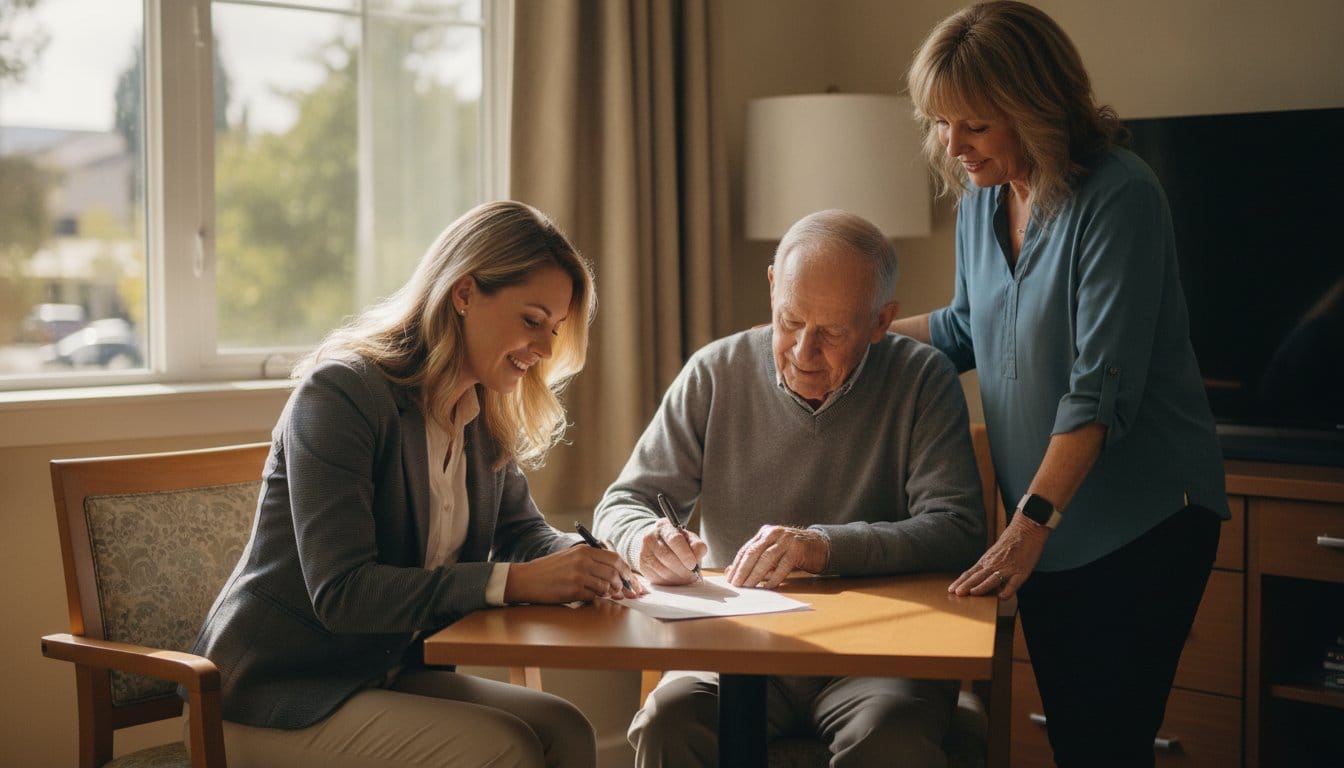
Imagine you’ve finally received the Power of Attorney documents your father needs, but his health has shifted and he’s now in a memory care unit. You’re balancing work, family, and his daily care, only to find that most offices require him to travel to them for a signature. Finding a reliable mobile notary for assisted living facilities Sacramento shouldn’t be the most difficult part of your week. It’s a stressful situation where timing is critical and the stakes for your family’s legal and medical future are high.
We understand that coordinating legal signatures in a care environment feels like a logistical mountain, especially when you’re worried about your loved one’s comfort or mental capacity. This guide will show you how to secure compassionate, professional mobile notary services that prioritize your loved one’s dignity and legal protection. We’ll walk through the specific steps to prepare for a facility visit, how to handle identification requirements, and what’s needed to ensure your documents are legally binding and correctly executed. You’ll gain a clear path to completing essential paperwork with a professional who arrives on time and handles the details with the care your family deserves.
Key Takeaways
- Understand why specialized mobile services are essential for residents of Residential Care Facilities for the Elderly (RCFEs) where mobility issues make traditional notary visits impossible.
- Identify the specific legal documents, such as Durable Power of Attorney and Advance Healthcare Directives, that are most critical for securing your loved one’s financial and medical future.
- Learn about the California requirements for signer identification and the notary’s legal duty to assess the willingness and awareness of a senior before any document is signed.
- Discover how to use a professional mobile notary for assisted living facilities Sacramento to navigate complex facility protocols and ensure a smooth, legally compliant signing process.
- Access a practical preparation checklist designed to help you coordinate with facility staff and prepare your loved one for a successful, stress-free appointment.
The Role of a Mobile Notary in Sacramento Assisted Living
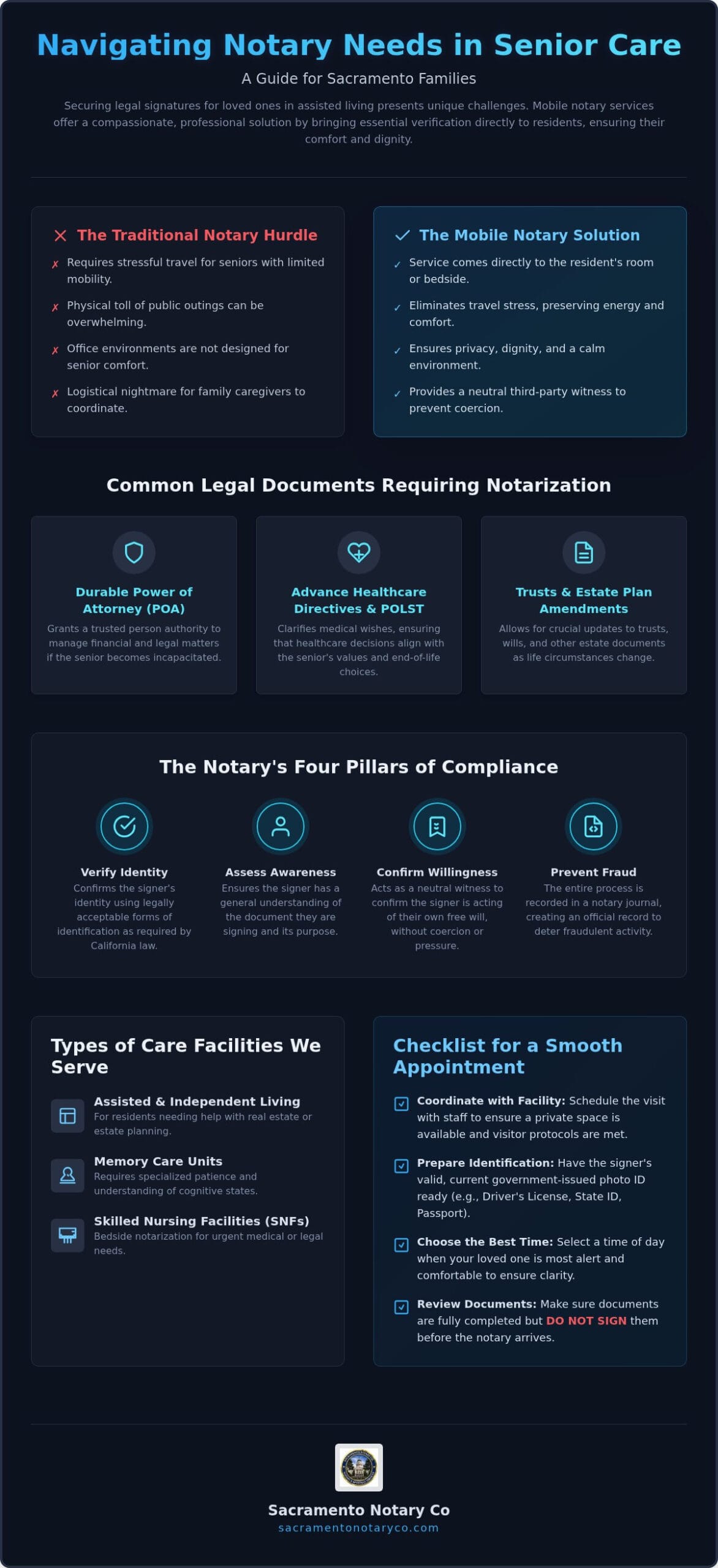
A mobile notary for assisted living facilities Sacramento serves a vital function by bringing legal verification services directly to residents who can’t easily leave their homes. In California, these facilities are officially known as Residential Care Facilities for the Elderly (RCFEs). Unlike a standard office environment, an RCFE requires a notary who understands the nuances of senior care. While a Notary Public primarily serves as an impartial witness to prevent fraud, their role in a care facility also involves ensuring the signer is acting of their own free will without outside pressure. This specialized service bridges the gap between complex legal requirements and the practical realities of aging.
Traditional options like banks or shipping centers often present insurmountable hurdles for seniors. These locations require the signer to be physically present at a counter, which isn’t feasible for those with limited mobility or chronic health conditions. A mobile service eliminates the stress of transportation and the physical toll of a public outing. By providing dedicated bedside service, the notary meets the resident in their own comfortable environment. This is more than just convenience; it’s about accessibility. The notary acts as a neutral third party, observing the signing process to ensure that no one is being coerced. This presence helps maintain the legal integrity of the paperwork in a setting where family or facility staff might otherwise have conflicting interests.
Types of Care Facilities We Serve in Sacramento
We provide coverage throughout the Sacramento metropolitan area, visiting various types of licensed care environments to meet residents where they are most comfortable.
- Assisted Living and Independent Living: We work with residents in 55+ communities who may need help with real estate or estate planning documents.
- Memory Care: These units require specialized patience and an understanding of cognitive fluctuations. We work around the resident’s best time of day to ensure they are alert.
- Skilled Nursing Facilities (SNFs): For those in short-term rehab or long-term nursing care, we provide bedside notarization for urgent medical or legal needs.
Benefits of Choosing a Specialized Senior Care Notary
Choosing a professional who understands the specific needs of seniors makes a significant difference in the success of the appointment. A mobile notary for assisted living facilities Sacramento knows that rushing a resident can lead to confusion or signing errors that might invalidate the document later. We prioritize a methodical pace, allowing the resident plenty of time to process instructions and ask questions about the notarization process itself. We also come prepared for the physical realities of care facilities, such as using sturdy clipboards for signers who are in hospital-style beds or wheelchairs. Maintaining a calm, reassuring presence helps preserve the resident’s dignity during what can often be a high-stakes or sensitive legal moment.
Common Legal Documents Requiring Notarization for Seniors
Families often find themselves managing a sudden influx of paperwork when a loved one transitions into a care environment. Utilizing a mobile notary for assisted living facilities Sacramento ensures these documents are handled correctly without the stress of travel. Legal documents for seniors aren’t just administrative hurdles; they’re the tools that protect a resident’s rights and ensure their wishes are followed when they can no longer speak for themselves.
A Durable Power of Attorney (POA) is perhaps the most critical document in this category. It grants a designated person the authority to manage finances, pay bills, or handle legal matters if the senior becomes incapacitated. Without a notarized POA, families might face expensive court proceedings to gain conservatorship. Similarly, Advance Healthcare Directives and Physician Orders for Life-Sustaining Treatment (POLST) forms clarify medical wishes. Notarizing these forms provides peace of mind for both the family and the medical staff, ensuring that healthcare decisions align with the senior’s values.
Estate planning often requires updates as life circumstances change. Trust Amendments and Restatements are common when a senior moves into a facility and needs to adjust their financial plans. While some documents only require witnesses, many families choose to have Wills notarized to add a layer of verification that helps prevent future disputes. Real estate documents, such as Grant Deeds or Deeds of Trust, are also frequently needed if a family home is being sold or transferred to fund the cost of care.
Facility-Specific Paperwork
Residential Care Facilities for the Elderly (RCFEs) in Sacramento often require notarized signatures for admission agreements and residency contracts. These documents outline the legal relationship between the resident and the facility. You might also need notarized authorizations for the release of medical records or insurance claims, especially if a third party is managing the senior’s benefits. Financial affidavits are another common requirement for seniors applying for state or local assistance programs, such as Medi-Cal, which require verified proof of assets and income.
Estate Planning and Property Transfers
When a senior moves into assisted living, it often involves complex property decisions. We facilitate signatures for deed notarization in Sacramento, including Grant Deeds and Deeds of Trust. These documents must strictly adhere to California-specific notary acknowledgments and jurats to be accepted by the County Recorder. Notarizing living trusts is also a proactive step to avoid the lengthy and expensive California probate process. If you’re ready to secure these essential protections, you can schedule a mobile notary visit to your facility to ensure every signature is legally sound.
Ensuring Compliance: Signer Capacity and Identification
The most common reason a notarization fails in a care setting isn’t a missing document, but a lack of preparation regarding the signer’s capacity or identification. When you hire a mobile notary for assisted living facilities Sacramento, the notary has a legal and ethical obligation to ensure the resident is acting of their own free will. This process involves a brief but essential assessment of “willingness and awareness.” The notary must be confident that the signer understands what they are signing and wants to proceed with the transaction. This isn’t a medical exam, but rather a functional assessment to protect the senior from potential elder abuse or coercion.
Sometimes, a resident is mentally aware but physically unable to sign their name due to tremors or weakness. In these cases, California law allows for a “Signature by Mark.” This process requires the signer to make a mark, usually an “X,” in the presence of two impartial witnesses. One witness writes the signer’s name next to the mark, and both witnesses sign the document to verify they saw the act. These witnesses should not be mentioned in the document and should not have a financial interest in the outcome. Having these witnesses ready before the notary arrives prevents delays and keeps the appointment moving smoothly.
Addressing Mental Capacity and Cognitive Health
There’s a significant legal difference between occasional forgetfulness and a lack of capacity. A notary assesses capacity by asking open-ended questions about the document, such as “Can you tell me why we’re here today?” or “What does this paper do?” If a resident can explain the general purpose of the document, the notarization can usually proceed. However, if the signer is heavily medicated, non-responsive, or appears completely confused about the nature of the paperwork, the notary must refuse the service. If you’re unsure about your loved one’s current state, it’s often best to consult with their attorney before scheduling the visit.
Identification Solutions for Seniors
California law is strict about “satisfactory evidence” of identity. A mobile notary for assisted living facilities Sacramento typically looks for a current California Driver’s License, a Senior ID card, or a valid Passport. If your loved one’s ID has expired, check the expiration date immediately. California allows notaries to use an expired ID only if it was issued within the last five years. If no valid ID exists, we can use the “Credible Witness” method. This requires two people who have valid IDs, know the signer personally, and can swear under oath to the signer’s identity. These witnesses must be impartial and not named in the document being notarized. Checking these details at least 24 hours before your appointment ensures a successful visit.
Preparation Checklist for a Successful Facility Visit
Scheduling a mobile notary for assisted living facilities Sacramento is the first step, but the preparation you do beforehand determines the success of the appointment. Care facilities have specific rhythms, and timing the visit correctly makes a significant difference in your loved one’s comfort level. To ensure a smooth process, you should confirm the appointment time with both the notary and the facility staff at least 24 hours in advance. This prevents scheduling conflicts with physical therapy, meal times, or doctor visits.
The signer’s physical and mental state is the most critical factor. Ensure the resident is awake, alert, and has had their basic needs met before the notary arrives. If your loved one experiences cognitive fluctuations, schedule the visit during their “best” time of day, which is often in the morning. You must also gather all pages of the document, not just the signature page. A notary cannot legally perform their duties if the document is incomplete or missing pages. Finally, prepare a clear, well-lit space for the signing. If the resident is bed-bound, clear off a bedside table or ensure a sturdy clipboard is available for a firm signing surface.
Coordinating with Facility Administrators
Residential Care Facilities for the Elderly (RCFEs) have strict protocols for outside service providers. Always notify the front desk or the nursing station about the scheduled notary visit so they can clear the notary for entry. You should also check the facility’s specific policies regarding professional services; some locations may require the visit to take place in a common area rather than a private room. If your loved one shares a room or if the environment is particularly noisy, ask the staff to reserve a quiet common room or a private office to ensure the signer can focus without distractions.
Gathering the Necessary Participants
Review your documents early to see if they require additional witnesses beyond the notary. In California, these witnesses must usually be “disinterested,” meaning they aren’t mentioned in the document and won’t benefit from it. It’s often helpful to have a legal guardian or family spokesperson present for emotional support, though they cannot answer questions for the signer. It is important to remember that the notary public cannot serve as a legal witness to the same document they are currently notarizing. If you need help coordinating these details, you can book your mobile notary service here to ensure a professional, prepared specialist handles your family’s needs.
Sacramento Notary Co: Compassionate Support for Your Family
Sacramento Notary Co acts as a steady guide for families navigating the complexities of senior care. We understand that legal documentation is often the last thing on your mind when a loved one’s health changes. Our commitment is to provide a professional, transparent experience that lowers your stress during these high-stakes moments. We specialize in handling sensitive legal and medical documentation with the procedural accuracy required to ensure your paperwork is legally binding and accepted by the necessary institutions.
Health needs in a Residential Care Facility for the Elderly (RCFE) can shift quickly. If a resident’s condition changes or they aren’t feeling well on the day of an appointment, we offer flexible scheduling to accommodate those fluctuations. We prioritize clear, upfront information regarding our services, including detailed explanations of hospital notary fees in Sacramento. This transparency ensures that you can plan your family’s logistics without unexpected costs or administrative surprises during an already difficult time.
Why Sacramento Families Trust Our Mobile Service
Families choose us because we possess deep knowledge of the local Sacramento landscape. We’re familiar with the specific layouts and check-in protocols of major care facilities throughout the metropolitan area, which allows us to reach the resident’s bedside without delay. Our patience-first approach is specifically designed for residents living with dementia, memory loss, or hearing impairments. We don’t rush the signing process. Instead, we move at the resident’s pace to maintain their dignity and ensure they feel comfortable and informed throughout the notarization. Our track record of punctuality and procedural accuracy ensures that your documents are executed correctly the first time, preventing the need for costly and stressful re-dos.
How to Schedule Your Facility Visit
Our booking process is designed to be as frictionless as possible for busy caregivers and adult children. If you need a mobile notary for assisted living facilities Sacramento, the process begins with a simple intake to ensure we are fully prepared for the visit. To get started, please have the following information ready:
- Facility Information: The name and address of the care community or hospital.
- Document Details: The type of document requiring a signature (e.g., Power of Attorney, Trust Amendment).
- ID Verification: Confirmation of the signer’s current identification status.
- Special Requirements: Mention if the signer requires a “Signature by Mark” or if credible witnesses will be needed.
If you have these details ready, you can contact us to secure reliable mobile notary services in Sacramento. We’ll guide you through the logistical requirements and confirm a time that works best for your loved one’s schedule, ensuring a calm and successful signing experience.
Secure Your Family’s Legal Future with Confidence
Securing essential legal protections for a loved one in a care facility doesn’t have to be a source of stress. By focusing on proper identification and ensuring the signer is alert and prepared, you can navigate the complexities of estate planning with ease. You’ve learned that coordinating with facility staff and choosing a specialized mobile notary for assisted living facilities Sacramento are the most effective ways to prevent delays or procedural errors. Whether you’re finalizing a Power of Attorney or updating a living trust, having a steady guide makes the entire process manageable.
Sacramento Notary Co brings specialized hospital and ALF bedside experience directly to your door. As a local Sacramento expert, we pride ourselves on providing calm, professional, and punctual service tailored to the unique needs of seniors. We’re here to ensure your high-stakes documents are handled with the procedural accuracy they require. Schedule a Compassionate Mobile Notary Visit Today to cross this important task off your list. You’ve taken the right steps to protect your family, and we’re ready to help you finish the process with peace of mind.
Frequently Asked Questions
Can a notary come to a memory care unit in Sacramento?
Yes, a mobile notary for assisted living facilities Sacramento can certainly visit residents in memory care units. The primary requirement for any notarization is that the signer must be alert and capable of understanding the document’s purpose at the moment of signing. We often suggest scheduling these visits during the morning when residents are typically most refreshed. If the resident is unable to communicate, the notarization cannot legally proceed.
What if my parent cannot sign their name due to a physical tremor?
If a resident is mentally aware but physically unable to sign due to a tremor or weakness, California law allows for a Signature by Mark. This process requires two impartial witnesses to be present. The signer makes a mark, such as an X, and the witnesses sign the document to verify they observed the act. This ensures that physical limitations don’t prevent a senior from executing necessary legal or medical paperwork.
Does the notary need to read the entire document to the senior?
No, a notary isn’t required to read the entire document aloud, but they must verify that the signer understands what they are signing. The notary will typically ask open-ended questions to confirm the resident’s awareness of the document’s general nature. If the document is exceptionally long, it’s helpful if a family member or attorney has reviewed the contents with the senior prior to the notary’s arrival to ensure everyone is comfortable.
What happens if the notary determines the signer does not have capacity?
If a notary determines that a signer lacks the necessary mental capacity or is being coerced, they are legally obligated to refuse the service. This is a protective measure designed to prevent elder abuse. In these situations, the notarization stops immediately. If capacity is in doubt, you may need to consult with a legal professional or wait for a time when the resident is more alert and capable of demonstrating awareness.
Can a nursing home staff member act as a witness for a notarization?
While California law doesn’t strictly forbid it, most Sacramento care facilities have internal policies that prevent staff members from acting as witnesses for residents. This is to avoid potential conflicts of interest or liability issues for the facility. It’s best to arrange for two impartial friends or neighbors who aren’t named in the document to serve as witnesses. This prevents delays and ensures the notarization meets all legal and facility requirements.
How much does a mobile notary charge to visit an assisted living facility?
Mobile notary fees in California involve a state-mandated maximum per signature, which is set by law. As of late 2026, this fee is $15 per signature, though it’s scheduled to increase to $20 in early 2027. In addition to this per-signature cost, a mobile notary for assisted living facilities Sacramento will charge a travel fee for visiting the location. These travel costs aren’t regulated by the state and vary depending on the distance.
What forms of ID are acceptable if my parent’s driver’s license is expired?
If a driver’s license is expired, a California Senior ID card or a valid U.S. Passport are standard alternatives. California law also permits the use of an expired ID if it was issued within the last five years. If no valid photo identification exists, we can use the Credible Witness method. This requires two people with valid IDs who can swear under oath to the signer’s identity, provided they aren’t named in the document.
Is a bedside notarization as legal as one done in an office?
Yes, a bedside notarization carries the same legal weight as one performed in a traditional office or bank. The location of the act doesn’t change the validity of the notary’s seal or the document’s legal standing. As long as the notary follows all California state laws regarding identification, capacity, and procedural accuracy, the document is fully binding. This allows seniors with limited mobility to manage their affairs with the same legal security as anyone else.