


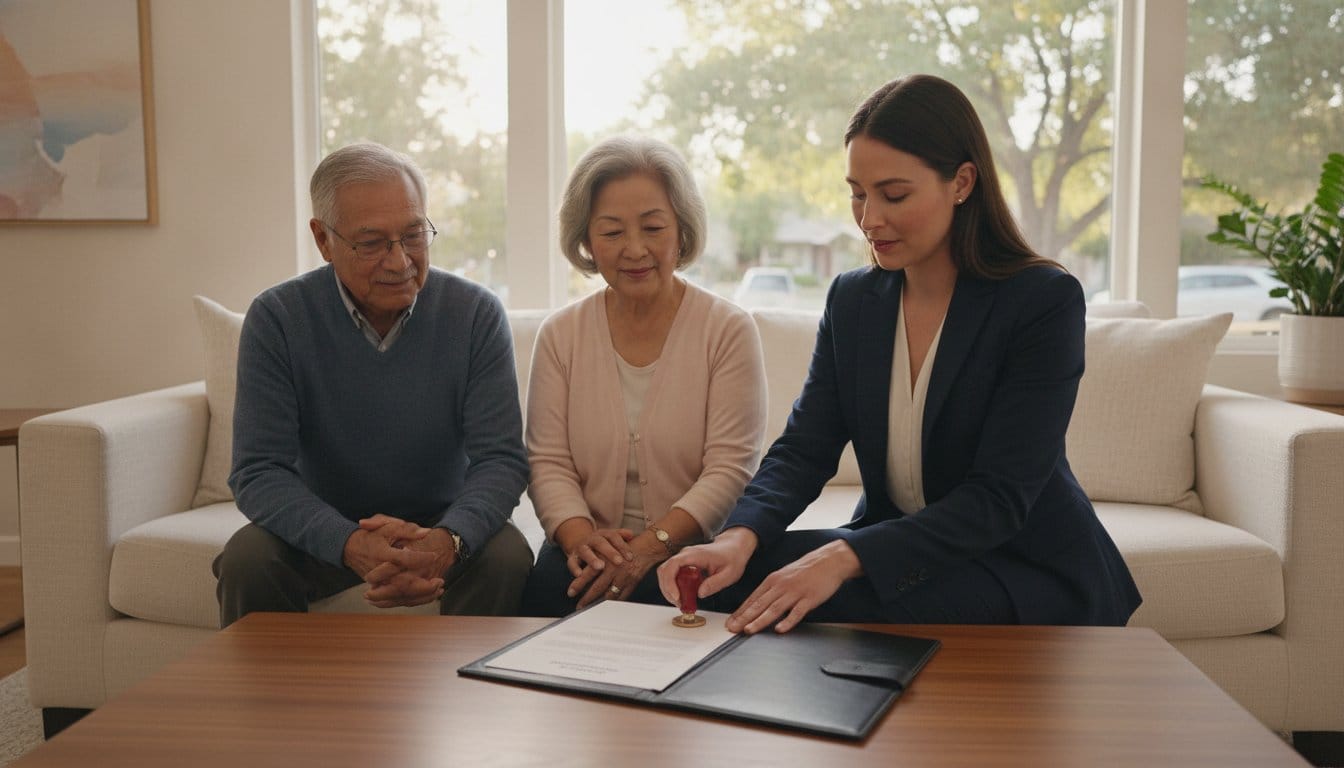
Imagine the stress of trying to transport an aging parent to a crowded office just to sign a few legal documents, only to worry that a minor clerical error could lead to two years of probate delays. It’s a common fear for many families in Northern California who want to ensure their estate plan is airtight. Finding a reliable notary for living trust Sacramento services shouldn’t add more weight to an already emotional process. You’ve worked hard to build your legacy, and you deserve a signing experience that’s as smooth and secure as the trust itself.
It’s true that California’s requirements for witnesses versus notarization can feel confusing, especially when you’re dealing with high-stakes assets. This article will show you how to properly execute your documents to ensure they’re legally binding without ever leaving your home or hospital room. We’ll walk through the specific steps to secure your estate plan, explain current state requirements, and show you how a mobile specialist prevents the errors that often lead to document rejection.
Key Takeaways
- Understand why your estate plan remains legally inactive until a professional verifies the signatures to prevent future estate litigation.
- Learn the specific California Probate Code requirements for when a notary is required versus when additional witnesses are recommended.
- Discover the logistical advantages of using a mobile notary for living trust Sacramento residents to avoid the privacy risks and liability refusals common at local banks.
- Prepare for your signing appointment by organizing your complete trust package and ensuring all signers have valid, government-issued identification.
- Explore how specialized mobile services provide reliable document verification at sensitive locations, including local Sacramento hospitals and healthcare facilities.
Why Notarizing Your Living Trust is the Final Step in Sacramento Estate Planning
A living trust is one of the most powerful tools in estate planning, but it remains a dormant stack of paper until the final signature is authenticated. In California, the notarization process acts as the “ignition” for your trust. Without it, financial institutions and county officials may refuse to recognize the document’s authority. This is why finding a qualified notary for living trust Sacramento residents can trust is the critical final step in your planning journey.
If you leave your trust unnotarized, your heirs might face the very probate process you intended to avoid. In Sacramento, the probate backlog can stretch between 12 and 18 months, leaving assets frozen and families in limbo. A properly notarized document provides the legal weight necessary to bypass the William R. Ridgeway Courthouse entirely. It’s the difference between a seamless transfer of wealth and a long, expensive legal battle.
The Role of the Notary Public in Estate Documents
A notary public serves as an impartial witness to the signing. Their presence protects your legacy by ensuring the process is transparent and legally sound. When we arrive for a signing, we focus on three specific protective measures:
- Verifying the identity of all signers through current, government-issued photo credentials to prevent identity fraud.
- Confirming that everyone signing the document is doing so of their own free will and understands what is a trust and how it functions.
- Maintaining a formal notary journal that records the details of the signing, which serves as a vital piece of evidence if the trust is ever challenged in court.
This verification process helps prevent future estate litigation by ensuring no one can later claim the grantor was coerced or lacked the capacity to sign. It’s a layer of security that protects the grantor and the beneficiaries alike.
Sacramento Specifics: The County Recorder and Your Trust
Local logistics often dictate how your trust documents are handled. If your estate includes real estate within the county, certain documents must be recorded at the Sacramento County Recorder’s office located at 600 8th Street. This is especially true for trust-related deeds that transfer your home or land into the trust’s name.
The connection between your trust and your property is permanent. If the deed isn’t properly notarized and recorded, the property remains outside the trust, potentially triggering probate for that specific asset. A Certificate of Trust is a condensed version of your trust document that allows you to prove the trust exists to banks and title companies without revealing private details about your beneficiaries or assets. Using a professional notary for living trust Sacramento service ensures these specific local requirements are met with precision, keeping your property secure and your private information protected.
California Requirements for Living Trusts: Notary vs. Witnesses
Under the California Probate Code, a revocable living trust is not strictly required to be witnessed to be legally valid. It must, however, be signed by the grantor and notarized. This differs significantly from a Last Will and Testament, which specifically requires at least two witnesses who are present at the same time to watch the testator sign. While the trust itself might only require a notary seal, many Sacramento estate attorneys recommend using two disinterested witnesses in addition to a notary. This “best practice” standard provides an extra layer of protection if someone later challenges the grantor’s mental capacity or claims the document was forged.
One common pitfall involves the use of “interested” witnesses. If a witness is also a beneficiary who stands to inherit from the trust, their presence can create a legal presumption of undue influence or fraud. To avoid these complications, most families find it’s simpler and more secure to hire a notary for living trust Sacramento specialist. A professional notary acts as a neutral third party, ensuring that the signing process remains objective and beyond reproach in a court of law.
Signature Requirements for California Trusts
The signature on your trust document must match your government-issued identification exactly. If your ID includes a middle name but your trust document only uses an initial, it can lead to delays at the bank or the County Recorder’s office. Many estate plans also include a “self-proving affidavit,” which is a sworn statement signed by the witnesses and notarized. This affidavit serves as testimony, so the witnesses don’t have to appear in court later to verify the signing. Procedures outlined in the official California Notary Public Handbook ensure that the notary seal provides a presumption of authenticity, making it much harder for disgruntled relatives to contest the document’s validity.
Handling Multiple Signers and Trustees
Coordinating an estate plan often involves multiple parties, such as spouses acting as co-trustees or adult children serving as successor trustees. If one trustee is out of town or currently receiving care in a local hospital, the signing process can become a logistical challenge. It’s important to maintain consistent signatures across all forms, including the trust transfer deeds and power of attorney documents. If you are managing a complex signing involving multiple locations or sensitive environments, our mobile signing services provide a reliable way to ensure every signature is captured correctly and legally verified without the need for everyone to be in the same room at once.
The Benefits of Using a Mobile Notary for Your Estate Documents
Many people assume they can simply walk into their local bank branch to finalize their estate plan. However, residents seeking a notary for living trust Sacramento often face unexpected refusals. Retail banks frequently implement “no trust” policies to limit their legal liability. Because living trusts are multi-page, complex legal instruments, bank employees are often instructed to decline these signings. This leaves families scrambling for a solution at the eleventh hour when they realize their local branch won’t help.
Mobile notaries fill this gap by providing specialized expertise that generalists at a retail branch lack. A bank notary is often a teller who performs notarizations between customer transactions. In contrast, a mobile specialist focuses exclusively on document authentication. We understand the gravity of an estate plan and provide the 30 to 60 minutes of undivided attention required to review the entire trust package. This level of focus ensures that no signature line is missed and every exhibit is properly acknowledged.
Mobile Notary vs. Traditional Bank Notaries
The logistical hurdles of a bank visit extend beyond the refusal of service. If your trust requires two disinterested witnesses, coordinating their arrival at a retail bank branch can be a nightmare. Most banks won’t allow their employees to serve as witnesses for estate documents due to internal risk management rules. A mobile notary solves this by meeting your entire group at once. We provide a steady, methodical environment where everyone can sign in the correct order without the pressure of a waiting line behind them.
Privacy is another significant factor. Signing a trust involves discussing sensitive financial details and family dynamics. A busy bank lobby or a shared office cubicle isn’t the appropriate setting for these conversations. By choosing a mobile service, you can execute your documents in the comfort and confidentiality of your own dining room.
Specialized Service for Sacramento Seniors
For Sacramento seniors, the benefits of a mobile service go beyond simple convenience. Traveling to a physical office can be physically taxing and emotionally intimidating for elderly clients. We prioritize a patient, reassuring approach that lowers stress during the signing. When you book a notary for living trust Sacramento specialist to visit a home or an assisted living facility in Folsom, Roseville, or Elk Grove, you’re ensuring the grantor feels comfortable and fully understands the process before any ink hits the paper.
Health concerns or mobility issues shouldn’t be a barrier to securing your legacy. We frequently provide hospital bedside notarizations for urgent estate planning needs. This flexibility allows families to focus on their loved ones while we handle the logistical details of the legal documentation. Our goal is to make a high-stakes moment feel manageable through punctuality and procedural accuracy.

How to Prepare for Your Living Trust Notarization in Sacramento
Preparing for your signing ceremony is just as important as the legal drafting of the documents. When you schedule a notary for living trust Sacramento specialist, having everything organized prevents delays and ensures your documents are executed perfectly the first time. You’ve spent weeks or months coordinating with an attorney; don’t let the final thirty minutes become a source of stress due to missing paperwork or expired identification.
The signing ceremony is a formal legal event. It requires a quiet, well-lit space where all parties can sit comfortably. A dining room table or a large desk is usually the best choice. This environment allows the notary to methodically review each page, verify identities, and record the necessary entries in their official journal without distraction. If your trust requires neutral witnesses, ensure they are available at the scheduled time and understand that they cannot be beneficiaries of the estate.
Acceptable Forms of Identification in California
California law is strict regarding the identification a notary can accept. If your ID is expired or the name doesn’t match your trust documents exactly, the notarization cannot proceed. To keep your appointment on track, ensure all signers have one of the following current credentials ready:
- A California Driver License or ID Card issued by the DMV.
- A United States Passport.
- A foreign passport that has been stamped by the U.S. Citizenship and Immigration Services (USCIS).
- A valid driver license issued by another U.S. state.
If a signer is elderly and no longer has a valid ID, California allows for the “Credible Witness” solution. This involves two individuals who have their own valid IDs and can personally vouch for the signer’s identity under oath. This is a common solution we provide for bedside signings in Sacramento healthcare facilities.
The Signing Day Checklist
To ensure a frictionless experience, follow these logistical steps before your notary arrives:
- Do not sign or date any part of the trust package in advance. The notary must physically witness the act of signing to legally authenticate the document.
- Ensure all pages, including exhibits and asset schedules, are present and in the correct order. Missing attachments can lead to the document being rejected by banks or the County Recorder.
- Have a blue ink pen available for everyone. Professional estate planners prefer blue ink for original signatures because it makes it easy to distinguish the original document from black-and-white photocopies.
If you have questions about the logistics of your upcoming appointment, you can contact our mobile notary team to review your specific requirements and ensure you’re fully prepared for a successful signing.
Professional Trust Signings with Sacramento Notary Co
Sacramento Notary Co provides a steady hand during the most critical moments of your estate planning process. We specialize in the high-stakes environment of legal document verification, ensuring that every signature on your trust is captured with procedural accuracy. If you’ve been searching for a reliable notary for living trust Sacramento service, you need a partner who understands the local legal landscape. Our mobile specialists travel across the entire metropolitan area, bringing professional transparency directly to your home or office.
This service is designed to be a calm alternative to the stressful logistics often found in public offices. We prioritize punctuality and preparation, allowing you to focus on your family’s future rather than administrative hurdles. We also maintain open lines of communication with your estate planning attorney. If your legal counsel has specific instructions for the signing ceremony, we coordinate with them to ensure every requirement is met without delay.
Emergency and Hospital Bedside Notary
Estate planning doesn’t always happen according to a perfect schedule. Sometimes, a health crisis necessitates a rapid response for critical healthcare directives and living trusts. We provide specialized hospital bedside notarizations at major local facilities, including Sutter Medical Center and UC Davis Health. These environments require a specific level of empathy and an understanding of institutional protocols. If you require an emergency notary for living trust Sacramento area hospitals, we are prepared to navigate those requirements quickly.
Families in high-stress situations can depend on our experience navigating hospital security and patient care schedules. We arrive prepared to handle the unique challenges of a clinical setting, such as ensuring the signer is alert and aware of the document they are executing. This specialized support prevents errors during sensitive moments, giving you peace of mind when it matters most. We move efficiently through the process to respect the patient’s comfort and the medical staff’s time.
Booking Your Appointment
Our booking process is designed to be as frictionless as possible. Whether you need a visit to a private residence, a corporate office, or a care facility, we offer a straightforward scheduling system. We believe in professional transparency, which is why we provide clear information regarding our travel and service availability before we ever leave for your location. This instructional approach ensures you know exactly what to expect when we arrive.
Once your appointment is set, we move logically through the verification process. We confirm all identification is valid and all signers are ready for the ceremony. This methodical approach ensures that your documents are legally binding and ready for immediate use. Schedule your mobile trust notarization with Sacramento Notary Co today to finalize your estate plan with a dependable local specialist.
Finalize Your Estate Plan with Confidence
Securing your legacy requires more than just drafting the right documents; it requires the legal authentication that only a professional signing ceremony provides. By choosing a specialized notary for living trust Sacramento service, you avoid the common pitfalls of bank rejections and improper witness selection. This final step is what keeps your estate out of the probate backlog and ensures your wishes are respected without unnecessary delays.
Sacramento Notary Co provides a calm, reliable mobile service that comes directly to your door or care facility. We are experts in Sacramento County hospital bedside signings and focus exclusively on complex documents like Wills, Trusts, and Power of Attorney. Our goal is to make the verification process as frictionless as possible for your family, especially during time-sensitive or high-stress situations.
Book Your Professional Trust Notarization in Sacramento to complete your estate plan today. Protecting your life’s work is a significant achievement, and we are here to help you cross the finish line with ease and professionalism.
Frequently Asked Questions
Do I need a notary for a living trust in California?
Yes, you must have your living trust notarized to ensure it is legally enforceable and recognized by financial institutions. While California law provides some alternatives for witness signatures, notarization is the industry standard for transferring real estate and other significant assets into a trust. This step provides the necessary verification that the grantor signed the document willingly and was of sound mind at the time of execution.
Can a notary also act as a witness for my trust in Sacramento?
No, a notary public cannot serve as both the notary and a witness on the same document. To maintain the integrity of the signing, the notary must remain an impartial third party. If your trust documents require two disinterested witnesses, you must arrange for two separate individuals who are not beneficiaries of the estate to be present during the signing ceremony.
Why won’t my bank notarize my living trust?
Many retail banks have internal policies that prohibit their employees from notarizing complex legal documents like trusts to limit their liability. Because trust packages often involve multiple pages and specific legal requirements, bank tellers are usually instructed to decline these requests. Hiring a specialized notary for living trust Sacramento professional ensures your documents are handled by an expert who understands the nuances of estate planning packages.
What happens if the signer is in a Sacramento hospital and cannot travel?
If a signer is receiving care and cannot travel, we provide mobile hospital bedside notary services at facilities like UC Davis Health and Sutter Medical Center. We travel directly to the patient’s room to facilitate the signing in a calm and respectful manner. This allows the family to finalize an urgent notary for living trust Sacramento request without the stress of moving a loved one who is in a fragile medical state.
How much does a mobile notary charge for a trust signing in Sacramento?
California Government Code § 8211 mandates that the maximum fee for an acknowledgment or jurat is $15 per signature. In addition to this state regulated fee, mobile notaries charge a travel fee based on the distance and time of the appointment. We provide clear, upfront information regarding travel costs so you can plan your estate signing with total financial transparency.
What documents are typically included in a living trust signing package?
A standard estate planning package usually contains the Revocable Living Trust agreement, a Pour-Over Will, and a Durable Power of Attorney. It also includes an Advance Healthcare Directive and the specific Grant Deeds required to transfer real property into the trust. Each of these documents serves a different legal purpose and requires its own set of notarized signatures to be effective.
Does a living trust need to be recorded with Sacramento County?
The trust document itself is a private record and is not recorded with the county or any government agency. However, any deeds that transfer real estate ownership into the name of the trust must be recorded at the Sacramento County Recorder’s office located at 600 8th Street. Recording these deeds is the only way to officially “fund” the trust with your real estate assets.
What if the signer has a different name on their ID than in the trust?
The name on your government issued identification must generally match the name used in your trust documents to satisfy California’s strict notary laws. If there is a significant discrepancy, the notary may not be able to proceed using that ID. In these cases, we may use the “Credible Witness” method, where two people who have valid IDs and know the signer personally swear under oath to the signer’s identity.